Is It Really "Hunting"?
In recent years there has been an uptick in interest in “long range” target shooting. This term typically means 400-500 yards but it can be much farther: my club has a 600-yard range and 1000 yards isn’t unusual. This sport arose as a way to challenge one’s abilities. Along the way it’s spurred the development of new rifle designs and new calibers specifically for that purpose.
While some of these rifles use “standard” calibers more go towards the “magnum” end. Some are chambered for the classic .300 Winchester Magnum, others in .300 Norma Magnum .338 Lapua Magnum, etc. The term “magnum” is not an accident. The gun industry’s pursuit of ever-higher velocity figures rests solidly on the fact that American shooters are obsessed with the idea that bullet velocity, above all other considerations, is the best measure of performance. That word "magnum" has real resonance when it comes to rifle and ammunition sales.
In pursuit of this ideal the companies have lately started making ammunition that employs steel alloy cases capable of containing pressures far greater than any brass case could deal with. Federal sells their “7mm Back Country” ammunition which is SAAMI rated to 80,000 PSI, a far greater pressure than the 50-65,000 PSI of rounds such as the .308 Winchester or the grand old .30-06. These calibers are presented to shooters who firmly believe that “Faster is better and don’t you ever forget it.” Higher pressures = higher velocity, higher velocity = better performance. That's a winning formula in today's market.
There's no doubt that such calibers shoot flatter (i.e., the bullets follow a lower trajectory over their flight); in shooting paper targets at long range that’s important. The new rifles that are intended to use such ammunition are no doubt safe with it (the company lawyers have seen to that), and the stuff seems to sell well. A bonus for the gun makers is that if someone isn’t sure his ratty old Winchester Model 70 or Remington 700 can handle such pressures, well, he’ll just have to buy a new rifle, won’t he? As important as velocity is the ability to see the target clearly, hence the proliferation of scopes that range in power up to (and perhaps beyond) 30X.
Of course it’s of no use to the serious target shooter to have high velocity and a clear sight picture if the guns don’t or can’t put those blazing bullets where they need to be, as close together as possible. New rifles and scopes are made with advanced materials and superb modern manufacturing methods that combine to produce accuracy that the best shooters of the not-so-distant past would find nearly unbelievable. Many manufacturers guarantee that their rifles will shoot 0.5 MOA (Minutes of Angle) right out of the box. That means half an inch at 100 yards; at, say, 500 yards, less than 2.5 inches will separate points of impact. In his wildest dreams Jack O’Connor (1902-1978)—a legendary mountain hunter and gun writer—could not have imagined such precision.
All this is to the good when it comes to punching holes in a paper target a quarter-mile or more distant (that’s 440 yards; 1000 yards is a little more than half a mile). I'm all in favor of rifles that are inherently more accurate than Grandpa's old "Thutty-thutty" was; I like the idea of scopes that are tougher and more reliable than those of 50-60 years ago. (By the way, I can remember those not-quite-raging-but-not-entirely-polite arguments over whether a scope was an acceptable accessory at all, but that ship sailed long ago. I use scopes and justify them because my eyes ain't what they used to be; and because centerfire rifles today virtually never have open sights—a truly execrable practice—so a scope is required.) Inevitably, however these super-accurate rifles, high-powered scopes, and Mega-Magnum ammunition are now being marketed to hunters, not just target shooters. This development was unavoidable given the realities of today’s shooting and hunting culture, allied to the need for gun and ammunition companies to make money. But it raises reservations about the state of affairs in the hunting field these days.
Now, I’m an Eastern Woodlands hunter, though I've hunted plains game in Africa, where the ranges were rather longer than I'm used to here in Virginia. In Namibia I made a kill at a measured 252 yards, but 99% of the time when I’m shooting at an animal it’s well under 100 yards away. Our local woods are so thick that if something is much farther away than that you can't even see it. I do hunt one spot where I can see them coming from 100 to 125 yards but almost always I’ve been able to let them get a lot closer, well under 50 yards, before firing. I was more or less indoctrinated with the concept of “Get as close as you can, then get closer.” While I've got a certain ability in stalking on the whole I'm a sitzjager. A "sitting hunter." I plunk myself down in a good spot and wait for them to come to me. It doesn’t work 100% of the time but so far it’s worked well enough that I’ve managed to keep the freezer full of venison.
From my perspective it seems that popping off an animal from 400-500 yards away (or even farther) using a built-into-the-scope rangefinder, special mechanisms to compensate for bullet drop, etc., isn't consistent with the way I was taught to hunt. If 400 yards is as close as you can get, then perhaps it's time to find another animal you can approach to within a reasonable distance, or to pass on the shot. This business of adapting long-range target rifles to hunting at extreme range bothers me. It's more like sniping than anything else, certainly it's nothing like "hunting" as I understand the concept.
At 400-500 yards the animal's chances of detecting you are minimal to non-existent. He becomes a mere a target, something not consonant with the dignity of the quarry and the respect due to it. If I'm within my comfort zone—a maximum of, say, 150 yards, and that’s pushing the envelope for me—then there's a decent chance I'll be detected and the beast will escape to win the “contest.” At the ranges I hunt I can see every detail. I can count antler points if there are any (I don't really care about them anyway) and as the old saying has it, I can "...see the whites of their eyes..." quite literally. My job is to remain undetected until I pull the trigger. That means I've had to develop the art of invisibility and motionless waiting, to be aware of the wind, to make sure there are no obstructions in the bullet's path, and to do things as quickly and as cleanly as possible. If a stalk were required I could likely do a fair job of it but it almost never is. Once I did manage to stalk and kill a very young, very naive whitetail, but only once. A couple of days ago I tried it again on a deer I spotted before it spotted me. But 99.99% of the time if they see me or smell me—even when I’m sitting—they're gone before I can get the rifle up.
I will grant that a long range kill can indeed be fast, certain, and as close to painless as can be, but the other elements described above, i.e., a reasonable chance for the quarry to escape, and the requirement for me to make things as quick and as clean as possible, are missing from the equation. Even if I had a rifle and caliber completely capable of a 500-yard shot, even if I were shooting in perfect conditions of wind and light, I'd not be completely convinced that such a shot comes within the meaning of the term "fair chase" because let's be honest, there is little to no "chase" involved in any real sense. As a sitzjager I don't literally "chase" the game I hunt, but sit-and-wait is closer to a "chase" than shooting an animal who doesn't even know you're there because he's 500 or more yards away. It does take a certain amount of discipline and a whole lot of patience to do it the way I do it. (And by the way…I don’t do it from a tree stand, I sit on the ground; tree stands are far too dangerous for me to even consider using one.)
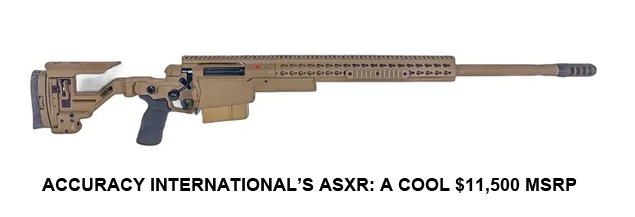
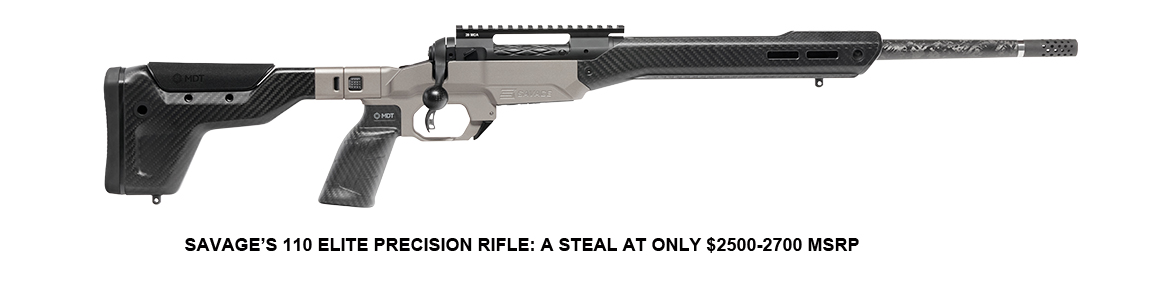
The current craze for really long range shots and the guns to make them seems to me to be mainly a smart marketing ploy to sell more guns by convincing enough people that they "need" to be able to make such shots. Given that some of these rifles cost anywhere from $6000+ to nearly $12,000 I imagine that the companies are very eager to convince people that they “need” one. I know that ranges out west are much longer than they are in the east so I assume that these rifles and rounds are currently being pitched primarily to those who hunt the Great Plains or in mountainous territory, but in the fullness of time there will be a shift to the wooded east as well.
Practice on a measured shooting range is important but field conditions don’t always match what you find there. Wind, light, temperature, elevation, barometric pressure, and other unknown environmental factors come into play, as artillerymen who shoot big shells at things literally miles away know.
Perhaps most people who take very long shots are able to do so successfully, though I’d bet that not all are. No doubt if statistics could be kept we’d find that the number of animals wounded, the number of animals not killed instantly but that wander off to die somewhere else never to be found, must be significant. Far more at 400-500 yards, let alone 1000, than at say, 50 to 150 yards. Yes, there are losses and woundings at short range too (I’ll be the first to admit I’ve had some) but as the ranges get to be extreme the incidence must be higher.
So I have some ethical issues with the whole concept of “long range hunting." Surely it must be possible to get closer than several hundred yards before shooting, even for a duffer and mediocre stalker like myself. If someone can’t get closer than that then perhaps something is wrong with his field skills. (Parenthetically I might point out that the American Bison was nearly exterminated by hunters using open-sighted single-shot rifles. I'd bet that a .50-90 Sharps, whose bullets had a trajectory like a rainbow, wasn't often used at 500 yards.)
The current ethos seems to be trending towards condoning an approach that might be acceptable in a wartime situation where the target—another human, presumably armed—is aware of the possibility of being “sniped” and who can at least theoretically fire back. But in the hunting field a deer, a bison, an antelope, or whatever, has no chance to do that. At 400, 500, and 1000 yards, the beast most likely isn’t even aware of the shooter's existence. The best he can hope for is a clean miss. Shooting holes in paper isn’t the same thing as purposely taking a life. One is a test of skill, the other is a disregard for the principles of fair chase.
| OPENING PAGE|
|SEASON LOGS |
| HUNTING | GUNS | DOGS |
| FISHING & BOATING | TRIP REPORTS | MISCELLANEOUS ESSAYS |
| CONTRIBUTIONS FROM OTHER WRITERS|
| RECIPES |POLITICS |